Enjoy discounts on puja samgri!

The Importance of Eco-Friendly Puja Samagri in Modern Homes
Introduction to Puja Samagri
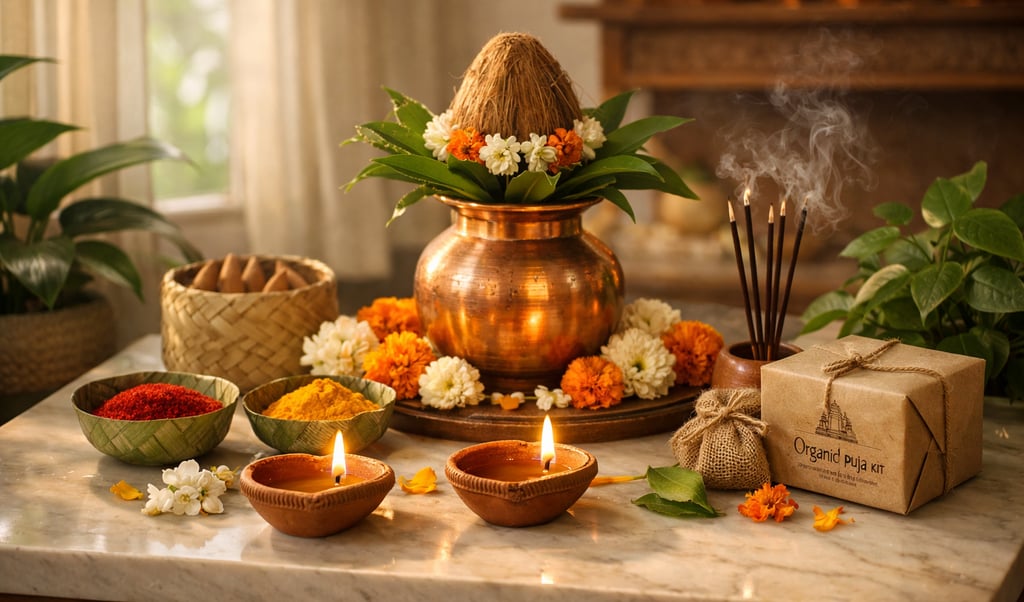
Puja samagri refers to items used in Hindu rituals, essential for offering to deities and embodying devotion. These items vary by tradition but commonly include flowers, fruits, incense, and food.
Each item symbolizes elements of life; for instance, flowers signify beauty, and fruits represent prosperity. Incense purifies the space, enhancing participants' spiritual experiences.
Currently, eco-friendly puja samagri is gaining importance due to environmental awareness. Many devotees prefer biodegradable items, honoring traditions and supporting sustainability.
However, traditional materials like plastic contribute to environmental degradation, and burning incense often releases harmful chemicals, affecting air quality and public health.
Non-biodegradable puja items lead to waste management issues after festivals, increasing pollution in public spaces and harming wildlife. Transitioning to eco-friendly materials is essential.
Eco-friendly alternatives, such as organic incense and biodegradable decorations, maintain religious practices while supporting environmental stewardship.
Biodegradable materials significantly reduce waste, contrasting with traditional non-degradable items. They promote a healthier environment by avoiding harmful substances.
Sustainable materials support local economies and artisan practices, crucial for community growth and cultural heritage.
In conclusion, integrating eco-friendly puja samagri balances spirituality and environmental responsibility. This shift not only reduces ecological impact but fosters a respectful observance of spiritual rituals.
How Eco-Friendly Samagri Supports Local Communities
Eco-friendly puja samagri benefits local communities by supporting artisans reliant on traditional production methods, fostering cultural identity and economic growth.
Rising demand for eco-friendly items creates sustainable markets, enhancing artisans' livelihoods and promoting fair trade practices.
Utilizing local materials minimizes transportation costs and promotes community resource recognition, thereby contributing to community welfare.
Choosing Eco-Friendly Alternatives for Puja
Choosing eco-friendly puja samagri is vital for spiritual and ecological values. Opt for natural and biodegradable materials like organic flowers, which decompose without harming the environment. Avoid synthetic items.
Consider sourcing locally to support sustainable practices. Products like organic rice and handcrafted items with eco-friendly materials are preferable.
Eco-friendly puja kits that include sustainable items offer convenience while ensuring responsible sourcing. Prioritizing these materials reflects devotion and care for the planet.
Case Studies: Impact Stories of Eco-Friendly Puja Initiatives
Many individuals and organizations have adopted eco-friendly puja practices, significantly improving local environments. For instance, an NGO in Mumbai promoted biodegradable materials, reducing waste during festivals and enhancing awareness.
In Kerala, temples collaborated with activists to recycle flowers into compost, nurturing community involvement and enhancing the ecosystem.
A Kolkata initiative replaced chemical idols with eco-friendly alternatives during Durga Puja, significantly decreasing pollution and promoting sustainable art.
Conclusion: The Future of Puja Practices in a Sustainable World
Integrating eco-friendly puja samagri into spiritual practices is essential for addressing environmental challenges. This transition fosters a deeper connection between spirituality and responsibility.
Adopting these practices influences future generations, encouraging them to value both cultural heritage and ecological sustainability.
In summary, the future of puja practices hinges on conscious individuals willing to adapt, ensuring devotional practices positively impact the world.