Enjoy discounts on puja samgri!
Eco-Friendly Holi & Traditional Rituals With Natural Colors (Complete Guide 2026)
Celebrate eco-friendly Holi 2026 with natural colors & traditional rituals. Learn about organic gulal, Holika Dahan puja & safe Holi celebration tips.
Introduction
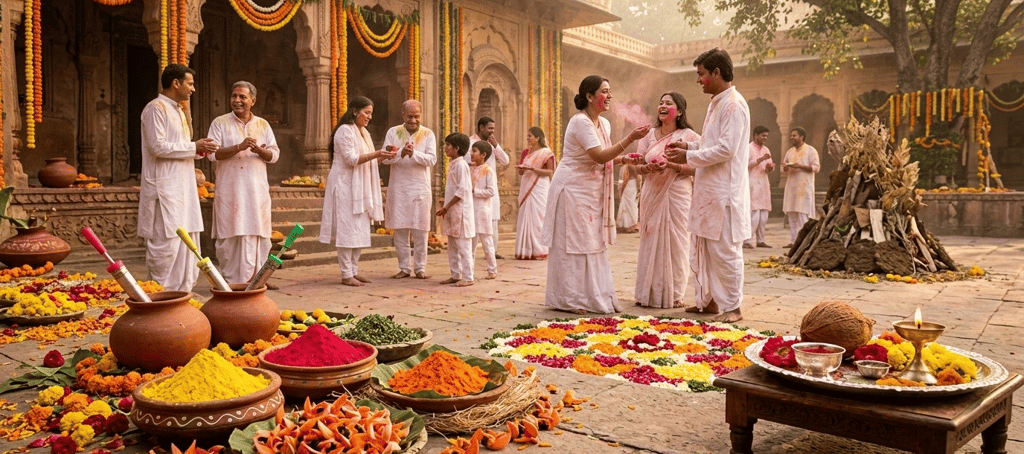
Holi, the festival of colors, is one of the most vibrant and joyous celebrations in India. As we welcome spring and bid farewell to winter, this ancient festival brings families together in a spectacular display of colors, laughter, and devotion. However, in recent years, the true spirit of Holi has been overshadowed by the use of harmful chemical colors and practices that damage our environment and health.
The time has come to return to our roots.
An eco-friendly Holi celebration is not just a modern trend—it's a return to the authentic traditions our ancestors followed. When we celebrate Holi with natural Holi colors and follow traditional Holi rituals, we honor both our cultural heritage and our responsibility toward Mother Earth.
This comprehensive guide will help you celebrate Holi 2026 in the most authentic, spiritual, and eco-friendly way possible.
What you'll discover:
The deep spiritual meaning behind Holi
Traditional rituals and their significance
Why natural colors are essential for your family's health
How to prepare eco-friendly Holi colors at home
Practical tips for a completely sustainable celebration
Let's embark on this colorful journey toward a more meaningful and responsible Holi!
The Spiritual Meaning of Holi
The Legend of Prahlad and Holika
Holi puja rituals commemorate one of the most powerful stories of faith and divine protection. The festival celebrates the victory of devotion over tyranny through the story of young Prahlad and his evil aunt Holika.
The sacred story:
Prahlad, the son of demon king Hiranyakashipu, was a devoted follower of Lord Vishnu. His father, blinded by ego, could not tolerate his son's devotion and plotted to kill him. Hiranyakashipu's sister Holika had a boon that made her immune to fire.
She tricked Prahlad into sitting with her in a blazing fire, intending to burn him alive. However, due to Prahlad's unwavering faith in Lord Vishnu, the divine power protected him while Holika burned despite her boon.
This miraculous event represents:
Faith triumphs over evil intentions
Divine protection for true devotees
The futility of ego and arrogance
Virtue always prevails over vice
Victory of Good Over Evil
Holi symbolizes the eternal truth that good always conquers evil, light overcomes darkness, and truth defeats falsehood. This message resonates through every ritual performed during the festival.
Spiritual lessons from Holi:
Let go of ego and negativity (symbolized by burning Holika)
Embrace love, forgiveness, and new beginnings
Purify yourself spiritually (Holika Dahan represents inner purification)
Celebrate unity and brotherhood (colors erase social barriers)
Importance of Holika Dahan
Holika Dahan, performed on the night before Holi, is the most sacred ritual of the festival. This bonfire ceremony carries deep spiritual significance:
Religious importance:
Marks the burning of evil and negativity
Invokes blessings of Lord Vishnu and Goddess Holika (in her purified form)
Purifies the atmosphere spiritually and physically
Signifies the end of winter and beginning of spring
Scientific benefits:
The fire's heat kills bacteria in the air
Traditional offerings include medicinal herbs that purify the environment
Creates positive energy in the community
Traditional Holi Rituals in India
Understanding traditional Holi rituals helps us celebrate the festival with deeper devotion and cultural awareness.
1. Holika Dahan Puja (Evening Before Holi)
Preparation:
Collect wood, dried cow dung logs, and coconut husk days in advance
Prepare a special Holika pyre in the community or home courtyard
Gather traditional offerings: wheat grains, coconut, jaggery, and new harvest
The Ritual:
Timing: Performed during auspicious muhurat (usually after sunset)
Offerings: Wheat stalks, whole coconuts, new grains, sugarcane
Mantras: Vedic chants invoking Lord Vishnu and seeking blessings
Lighting: The pyre is lit by the eldest family member or priest
Spiritual significance: Each offering represents gratitude for the harvest and prayers for prosperity. The fire symbolizes burning all negativity and welcoming positive energy.
2. Parikrama (Circumambulation) of the Fire
After lighting the Holika fire, devotees perform parikrama—walking around the fire in a clockwise direction, usually 3, 7, or 11 times.
Why we do parikrama:
Shows reverence to the divine fire
Absorbs positive energy from the sacred flames
Symbolizes moving away from darkness toward light
Traditional belief that it brings good fortune
During parikrama:
Chant "Jai Shri Krishna" or other divine names
Offer prayers for family welfare
Seek forgiveness for past mistakes
Make positive resolutions
3. Applying Gulal to Elders First
On Holi morning, traditional Holi celebration in India begins with respect for elders.
The proper sequence:
First, apply natural gulal to the feet of elders and seek their blessings
Then apply color to their forehead with reverence
Elders bless younger family members
Only after family blessings, the colorful celebration begins
This practice teaches:
Respect for hierarchy and tradition
Importance of family bonds
Seeking blessings before celebrations
Balancing fun with cultural values
4. Offering to Holika Agni
Traditional offerings in the fire:
Whole coconut: Symbol of ego we surrender
Wheat and grains: First harvest offered to gods
Jaggery and popcorn: Sweetness and prosperity
Dried fruits: Gratitude for nature's abundance
Meaning behind offerings:
Coconut breaking: Breaking ego and pride
Grains burning: Feeding the sacred fire, pleasing ancestors
Sweet offerings: Asking for sweetness in life
Whole process: Sacrifice before celebration
Why Choose Eco-Friendly Holi
The shift toward an eco-friendly Holi isn't just environmentally conscious—it's essential for our health and the planet's future.
Problems With Chemical Colors
Health hazards:
Skin allergies: Rashes, itching, and severe burns
Eye damage: Chemical colors can cause serious eye infections
Respiratory issues: Inhalation of toxic powder affects lungs
Heavy metals: Lead, mercury, and chromium in synthetic colors
Environmental damage:
Water pollution: Colors wash into rivers and groundwater
Soil contamination: Chemical residue affects soil fertility
Marine life threat: Toxic colors harm aquatic ecosystems
Long-term impact: Chemicals take years to decompose
Social concerns:
Increased hospital cases during Holi
Children are most vulnerable to chemical exposure
Water waste in water-scarce regions
Animals suffer from forced color application
Benefits of Natural Holi Colors
Choosing organic gulal for Holi and safe Holi colors for skin offers multiple advantages:
Health benefits:
100% skin-safe, no allergic reactions
Many natural colors have therapeutic properties
Safe for children and people with sensitive skin
No toxic inhalation risks
Environmental benefits:
Completely biodegradable
No water or soil pollution
Sustainable sourcing from plants and herbs
Minimal processing required
Cultural authenticity:
Returns to how our ancestors celebrated
Supports traditional knowledge
Preserves herbal wisdom
Maintains festival purity
Economic support:
Supports local artisans and farmers
Promotes organic farming
Reduces healthcare costs
Encourages sustainable businesses
Natural Colors Used in Traditional Holi
Our ancestors celebrated Holi with natural herbal colors for Holi made from flowers, herbs, and vegetables. Let's rediscover these traditional recipes.
1. Turmeric (Haldi) – Yellow Color
Source: Turmeric root powder
Benefits:
Antiseptic and antibacterial properties
Brightens skin naturally
Has medicinal value
Sacred in Hindu rituals
How to use: Mix pure turmeric powder with chickpea flour (besan) for better texture. Can also blend with sandalwood powder for fragrance.
2. Beetroot Powder – Pink/Red Color
Source: Dried and powdered beetroot
Benefits:
Rich in antioxidants
Completely skin-safe
Vibrant natural color
Nutritious for skin
Preparation: Dry beetroot slices in sun, grind into fine powder. Mix with arrowroot powder or cornstarch for volume.
3. Palash Flowers – Traditional Saffron/Orange Color
Source: Tesu or Palash tree flowers (also called Flame of the Forest)
Spiritual significance:
Traditionally used for centuries
Associated with spring season
Mentioned in ancient texts
Symbol of Holi celebration
Preparation: Collect dried Palash flowers, soak overnight, boil to extract color. Dry the paste to make powder or use liquid directly.
4. Neem and Tulsi – Green Color
Source: Dried neem or tulsi leaves
Benefits:
Purifies skin
Natural antibacterial properties
Cooling effect
Medicinal value
How to make: Dry neem or tulsi leaves, grind into fine powder. Mix with multani mitti for better consistency.
5. Multani Mitti & Sandalwood – Natural Gulal Base
Source: Fuller's earth and sandalwood powder
Benefits:
Base for mixing other colors
Skin-friendly and cooling
Traditional beauty ingredient
Enhances fragrance
Usage: Mix as a base with turmeric, beetroot, or other natural colors. Adds volume and improves skin benefits.
6. Hibiscus – Red Color
Source: Dried red hibiscus flowers
Benefits:
Deep natural red color
Hair and skin benefits
Cooling properties
Eco-friendly
Additional Natural Options:
Indigo powder: Blue color
Spinach powder: Green color
Coffee or cocoa powder: Brown color
Rose petals: Pink fragrance
Eco-Friendly Holi Celebration Tips
Transform your Holi 2026 into a completely sustainable celebration with these practical tips.
1. Use Herbal Gulal and Natural Colors
Action steps:
Purchase organic gulal for Holi from trusted sources like gaugora.com
Make colors at home using the recipes shared above
Avoid synthetic colors completely
Check ingredients before buying
Benefits:
Guaranteed safety for family
Support eco-friendly businesses
Teaching children about sustainability
Authentic traditional experience
2. Celebrate With Dry Colors
Why dry colors:
Uses less water
Easier to clean
More traditional
Less messy and wasteful
Tips for dry color celebration:
Apply with gentle hands, not forcefully
Focus on faces and hair, avoid sensitive areas
Use minimal quantity for symbolic representation
Respect those who don't want to play
3. Use Cow Dung Logs for Holika Dahan
Traditional fuel sources:
Dried cow dung cakes (upla/kanda)
Coconut shells and husks
Dried wood from sustainable sources
Avoid plastics, tires, or toxic materials
Why cow dung logs:
Burns cleanly with minimal smoke
Sacred in Hindu traditions
Produces medicinal smoke
Eco-friendly and renewable
Supports gaushalas
Where to source: Purchase natural cow dung products from gaugora.com for authentic and pure Holika Dahan materials.
4. Avoid Plastic Decorations
Sustainable decoration ideas:
Fresh flower garlands (marigold, roses)
Mango leaf torans (door decorations)
Clay diyas and earthen pots
Rangoli with natural colors
Banana leaf decorations
5. Mindful Water Usage
Water conservation tips:
Avoid water balloons and water guns
Use buckets instead of running water for cleaning
Limit wet Holi to symbolic sprinkles
Celebrate primarily with dry colors
6. Natural Flowers and Offerings
For Holika Dahan puja:
Use locally grown seasonal flowers
Avoid imported or out-of-season flowers
Compost flower waste after puja
Choose organic offerings
7. Community Celebration
Organize eco-friendly Holi:
Host community events with natural colors only
Educate neighbors about harmful effects of chemicals
Arrange for proper waste disposal
Share homemade natural colors
8. Prepare Traditional Holi Delicacies
Eco-friendly food practices:
Cook traditional sweets like gujiya, malpua, thandai
Use seasonal, local ingredients
Serve in earthen or steel utensils, avoid plastic
Share with neighbors and less fortunate
FAQs About Eco-Friendly Holi
1. What are natural Holi colors made from?
Natural Holi colors are made from plant-based ingredients such as:
Flowers (Palash, rose, hibiscus)
Vegetables (beetroot, spinach)
Spices (turmeric, henna)
Herbs (neem, tulsi)
Natural minerals (multani mitti, sandalwood)
These ingredients are dried, powdered, and sometimes mixed to create vibrant, safe colors that have been used in traditional Holi celebration in India for centuries.
2. How can we celebrate eco-friendly Holi at home?
Steps for eco-friendly home celebration:
Make or buy organic natural colors
Use cow dung logs for Holika Dahan
Decorate with fresh flowers, not plastic
Celebrate with dry colors to save water
Prepare homemade traditional sweets
Clean up responsibly, compost organic waste
Educate family about environmental impact
Invite neighbors for community bonding
Start small—even replacing chemical colors with natural ones is a significant step toward an eco-friendly Holi celebration.
3. What is the importance of Holika Dahan?
Holika Dahan is the most sacred ritual of Holi with deep significance:
Religious importance:
Commemorates Prahlad's rescue and Holika's defeat
Symbolizes burning of evil and negativity
Marks the victory of devotion over demonic forces
Cultural importance:
Community bonding ritual
Marks seasonal transition to spring
Time for new beginnings
Spiritual importance:
Inner purification through fire element
Releasing old patterns and negativity
Invoking divine blessings for the year ahead
4. Are herbal Holi colors safe for skin?
Yes, safe Holi colors for skin made from natural herbs and plants are completely safe:
Safety features:
No chemical additives or heavy metals
Hypoallergenic and suitable for sensitive skin
Many have medicinal properties (turmeric is antiseptic)
Safe for children and elderly
Easy to wash off without harsh scrubbing
Important note: Always purchase from trusted sources and check ingredients. Some sellers may claim "herbal" but mix chemicals. Buy certified organic colors from authentic brands like those available at gaugora.com.
5. Can we make natural Holi colors at home?
Absolutely! Making natural herbal colors for Holi at home is easy, fun, and ensures purity:
Simple recipes:
Yellow: Pure turmeric powder
Red/Pink: Dried beetroot or hibiscus powder
Orange: Palash flowers soaked and dried
Green: Neem or spinach powder
Purple: Red cabbage extract
Benefits of homemade colors:
Complete control over ingredients
Cost-effective
Fun family activity
Educational for children
Guaranteed chemical-free
6. Why should we avoid chemical Holi colors?
Health risks:
Skin burns, rashes, and allergies
Eye irritation and vision problems
Breathing difficulties
Long-term exposure to carcinogens
Environmental damage:
Water contamination
Soil pollution
Harm to animals and birds
Non-biodegradable waste
Choosing natural alternatives protects both your family's health and the environment.
Conclusion
Holi 2026 offers us a beautiful opportunity to reconnect with our roots and celebrate this vibrant festival the way it was meant to be—pure, joyful, and harmonious with nature.
Remember these key points:
Holi is fundamentally a spiritual festival celebrating the victory of good over evil
Traditional Holi rituals like Holika Dahan carry deep religious and cultural significance
Eco-friendly Holi isn't a compromise—it's a return to authentic celebration
Natural Holi colors are safer, healthier, and more traditional
Small changes create big impacts for our environment and future generations
The essence of true Holi celebration:
Devotion and spirituality first, celebration second
Respect for nature and living beings
Community bonding and forgiveness
Joy that doesn't harm others or the environment
Teaching children cultural values and environmental responsibility
This Holi, let's make a conscious choice to celebrate responsibly. When we use natural colors, perform traditional rituals with devotion, and celebrate mindfully, we honor both our heritage and our planet.
Celebrate Holi the Sacred Way
Make this Holi special with authentic, eco-friendly spiritual products.
Celebrate Holi the traditional way with eco-friendly spiritual products from gaugora.com—your trusted source for natural cow dung logs, organic gulal, and sustainable puja materials.
Let's color our lives with devotion, our homes with tradition, and our earth with care.
Wishing you and your family a blessed, joyful, and eco-friendly Holi 2026!
Holi Hai! 🎨🌸