Enjoy discounts on puja samgri!

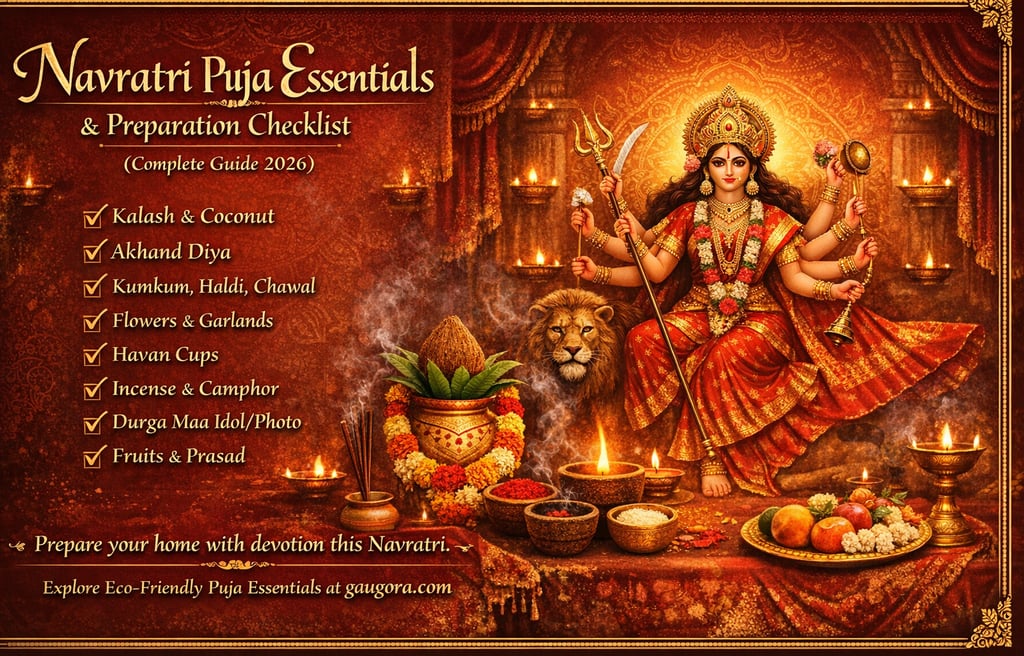
Navratri Puja Essentials & Preparation Checklist (Complete Guide 2026)
The Sacred Nine Days: Why Navratri Preparation Matters
Navratri — meaning "nine nights" — is one of the most spiritually powerful festivals in the Hindu calendar. Celebrated four times a year, with the Sharad Navratri (autumn) being the grandest, these nine auspicious days are devoted to worshipping the nine divine forms of Goddess Durga, collectively known as Navadurga.
Each day carries its own colour, significance, and ritual. From Shailputri on the first day to Siddhidatri on the ninth, the goddess transforms, blesses, and protects. The air during Navratri is charged with divine energy — mantra chanting, the fragrance of dhoop, the flicker of diyas, and the warmth of community prayers.
But here is something many devotees overlook: the quality of your preparation directly reflects the quality of your devotion. A thoughtfully prepared puja space — with pure, meaningful items — invites the goddess into your home with greater grace.
In this complete Navratri preparation checklist for 2026, we walk you through every essential item, every step of the setup, and why choosing eco-friendly puja items not only honours Mother Earth but also deepens your spiritual practice.
Complete Navratri Puja Samagri List
Before you begin, gather all your Navratri puja samagri well in advance — ideally two to three days before Pratipada (the first day). Here is your detailed checklist:
1. Kalash & Coconut
The Kalash (sacred copper or clay pot) filled with water, topped with mango leaves and a coconut, represents the goddess herself. It is the focal point of Kalash Sthapana on Day 1. Never substitute plastic for this sacred vessel.
2. Mango Leaves (Aam Patta)
Five to seven fresh mango leaves are placed around the Kalash. Mango is considered auspicious in Vedic tradition and symbolises fertility, prosperity, and divine invitation.
3. Red Cloth (Chunari)
The red chunari or dupatta is draped over the Durga Maa idol or framed photo. Red is the colour of power, passion, and the divine feminine energy — the very essence of Shakti.
4. Akhand Diya (Unbroken Lamp)
The Akhand Diya — a continuously burning clay lamp — is kept alight for all nine days without interruption. Clay diyas are preferred as they are natural, biodegradable, and deeply traditional. The unbroken flame symbolises unwavering devotion.
5. Incense Sticks & Dhoop
Agarbattis and natural dhoop sticks purify the atmosphere, calm the mind, and signal the beginning of sacred time. Choose naturally made incense without synthetic chemicals for both health and spiritual purity.
6. Cow Dung Havan Cups
For the havan (sacred fire ritual), cow dung havan cups are among the most sacred and effective tools in Vedic tradition. Made from pure gau mutra and gau dung, they burn cleanly, release purifying antimicrobial smoke, and are 100% biodegradable. Modern research even supports what our ancestors knew — cow dung smoke contains medicinal properties that purify the air.
👉 [Shop Cow Dung Havan Cups on gaugora.com]
7. Fresh Flowers & Garlands
Offer marigold garlands, red hibiscus, and seasonal flowers to the goddess daily. Fresh flowers represent purity of intention and the natural world's offering to the divine.
8. Kumkum, Haldi & Chawal (Akshat)
Kumkum (red vermillion), haldi (turmeric), and unbroken rice grains (akshat) are fundamental to every puja. They are applied as tilak, offered to the deity, and used to mark auspicious patterns.
9. Fruits & Prasad
Offer seasonal fruits like bananas, coconuts, and pomegranates. For prasad, traditional items include halwa, puri, and chana — especially on Ashtami and Navami when kanya pujan is performed.
10. Durga Maa Photo or Idol
A framed photo or a clay idol of Goddess Durga or any of her nine forms is the centrepiece of your altar. Choose a beautiful, respectfully crafted image that inspires devotion.
11. Gangajal (Holy Ganges Water)
A small amount of Gangajal is used to sanctify the puja space, the Kalash, and all offerings. It represents purity, divine blessing, and the flow of sacred tradition.
12. Camphor (Kapoor)
Burning camphor during aarti is non-negotiable. It burns completely without leaving residue — a symbol of the ego dissolving in the presence of the divine. Its fragrance is said to attract positive energy.
13. Bell (Ghanti)
The ringing of a puja bell dispels negative energies, announces the presence of devotion, and invites the goddess. The sound of the ghanti is believed to resonate with the universe's primordial sound — Om.
👉 [Explore Complete Navratri Puja Essentials at gaugora.com]
Step-by-Step Navratri Preparation Checklist
Step 1: Deep Cleaning & Home Purification
Begin preparations at least two days before Navratri. A thorough cleaning of your home — especially the puja room or altar area — is the first act of devotion. Clutter is an obstacle to divine energy. Wash the floor with water mixed with a few drops of Gangajal or cow dung-based phenyl for spiritual and physical purification.
Step 2: Setting Up the Altar
Choose a clean, elevated spot facing east or north for your altar. Lay a red or yellow cloth on the surface. Place the Durga Maa idol or photo in the centre. Arrange all your Navratri puja items for home neatly around the deity. Symmetry and cleanliness reflect the devotion within.
Step 3: Kalash Sthapana
Kalash Sthapana is performed on Pratipada — the first day of Navratri — ideally during Abhijit Muhurta (auspicious time). Fill the Kalash with fresh water, drop in a coin, some rice, and a betel nut. Wrap the Kalash with mango leaves and place the coconut on top. This ritual formally invites the goddess into your home.
Step 4: Daily Puja Routine
Morning: Wake before sunrise, bathe, and light the Akhand Diya. Offer fresh flowers, kumkum, and chawal. Chant Durga Chalisa or Saptashati stotras.
Evening: Perform the main aarti with camphor, ring the ghanti, offer incense and dhoop. If performing havan, use cow dung havan cups for a clean, sacred fire.
Prasad: Prepare and distribute prasad daily after aarti.
Step 5: Fasting Guidelines
Navratri fasting (vrat) is observed by many devotees for all nine days or selectively on key days. Common fasting foods include sabudana, singhara atta, fruits, and sendha namak. Fasting is not obligatory — devotion of the heart is what matters most.
Step 6: Eco-Friendly Tips for Navratri Celebration
Use clay diyas instead of plastic or electric decoratives
Choose cow dung havan cups over synthetic alternatives
Opt for natural flower offerings and avoid artificial garlands
Use biodegradable puja thalis and leaf plates for prasad
Avoid synthetic agarbattis — choose natural, charcoal-free incense
👉 [Shop Eco-Friendly Navratri Puja Items at gaugora.com]
Why Choose Eco-Friendly Puja Items for Navratri?
Spiritual Purity Through Natural Materials
Ancient Vedic texts prescribed only pure, natural materials for worship. Synthetic materials — plastic flowers, chemical incense, petroleum-based camphor — introduce impurity into the sacred space, both physically and energetically. Returning to natural, traditionally crafted puja items is a return to authentic devotion.
Environmental Responsibility as Dharma
In Hinduism, the earth itself is sacred — Bhumi Devi is a goddess. Celebrating Navratri with items that pollute rivers, soil, and air is fundamentally at odds with this belief. Eco-friendly puja items align your celebration with dharma — righteous living in harmony with nature.
The Unique Benefits of Cow Dung-Based Products in Havan
The cow holds a revered place in Hindu tradition, and for good reason. Cow dung-based havan cups and samidha (havan fuel) offer remarkable benefits:
They burn at a stable, consistent temperature, making them ideal for havan
The smoke contains compounds with natural antimicrobial and air-purifying properties
They are 100% biodegradable — no toxic residue, no harm to the earth
Scientific studies have documented that burning cow dung and ghee together during havan produces compounds that help purify indoor air
The Tradition of Smoke Purification
Havan is not merely ritual — it is environmental healing. When natural, pure materials are burned with mantras and intention, the resulting smoke is believed to purify the atmosphere, uplift consciousness, and invite divine blessings. This is why our ancestors were meticulous about the quality of havan materials. Honour that tradition in your home this Navratri.
👉 [Explore Cow Dung Havan Cups & Natural Puja Products at gaugora.com]
FAQ About Navratri Puja
Q1. What items are required for Navratri puja at home?
The essential Navratri puja samagri list includes: a Kalash with coconut and mango leaves, Durga Maa idol or photo, red chunari, Akhand diya (clay lamp), incense sticks and dhoop, cow dung havan cups, fresh flowers, kumkum, haldi, chawal (akshat), camphor, Gangajal, fruits, prasad ingredients, and a puja bell. All of these can be sourced in one place at gaugora.com.
Q2. Can we do Navratri puja without a priest?
Absolutely. Navratri puja can be performed at home without a priest. A basic puja involves Kalash Sthapana, daily aarti with mantra chanting, lighting the Akhand Diya, and offering flowers and prasad. What matters most is sincere devotion and a clean, prepared space. Many families follow their own regional traditions passed down through generations.
Q3. What is Kalash Sthapana and why is it important?
Kalash Sthapana is the ritual installation of the sacred pot (Kalash) on the first day of Navratri. It formally invites Goddess Durga into your home. The Kalash represents the universe and the divine mother's presence. It must be placed during an auspicious muhurta and kept undisturbed throughout all nine days.
Q4. Why should we use cow dung havan cups in Navratri?
Cow dung havan cups are the traditional, Vedic-approved vessel for sacred fire rituals. They burn cleanly without toxic smoke, are completely natural, and the resulting smoke carries purifying properties linked to antimicrobial compounds. Spiritually, the cow is sacred in Hinduism, and using gau-based products in worship is considered deeply auspicious and pleasing to the goddess.
Q5. How many days is Navratri observed and which days are most important?
Navratri spans nine nights and ten days. Every day has significance, but the key days are: Day 1 (Pratipada) for Kalash Sthapana, Day 7 (Saptami) for Saraswati Puja in many regions, Day 8 (Ashtami) and Day 9 (Navami) for Kanya Pujan, and Day 10 (Vijaya Dashami) for Durga Visarjan or Navratri conclusion.
Q6. What are eco-friendly alternatives for traditional puja items?
Excellent eco-friendly alternatives include clay diyas instead of plastic ones, cow dung havan cups instead of synthetic fire starters, natural agarbattis made from plant-based resins, biodegradable leaf plates for prasad, and organic flowers. Gaugora.com specialises in exactly these natural, pure, and eco-conscious puja items.
Prepare with Devotion, Celebrate with Purpose
Navratri is not just a festival — it is a nine-day spiritual journey. Each ritual, each offering, each flame lit in the goddess's honour carries the accumulated bhakti of thousands of years of tradition. When you prepare thoughtfully — gathering pure materials, cleaning your space with reverence, setting up your altar with love — you are not just following customs. You are participating in something ancient, powerful, and real.
Let this Navratri be your most meaningful yet. Choose purity. Choose tradition. Choose eco-friendly puja items that honour both Goddess Durga and Mother Earth.
Explore our complete range of natural, cow dung-based, and eco-friendly Navratri puja essentials at gaugora.com — crafted with reverence, made to make your puja truly divine.
👉 [Shop All Navratri Puja Samagri at gaugora.com — Jaya Mata Di! 🙏]