Enjoy discounts on puja samgri!
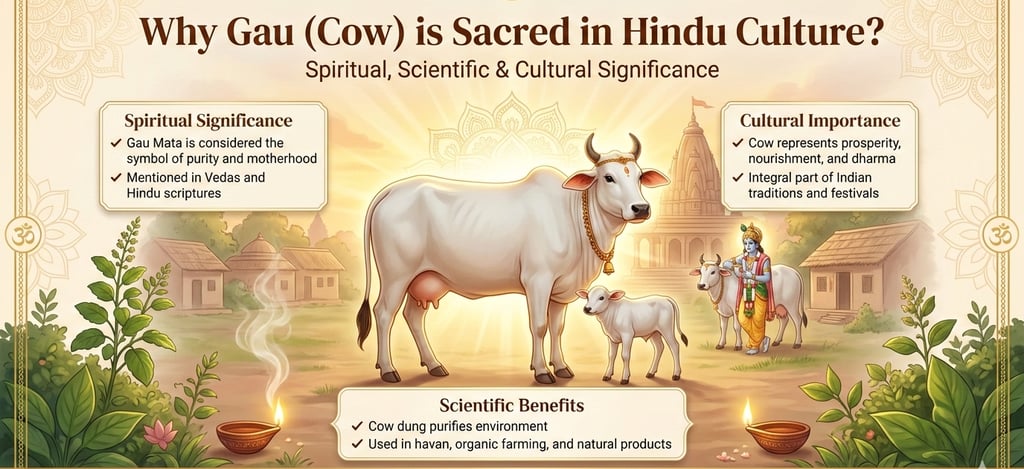
Why Gau (Cow) is Sacred in Hindu Culture? Spiritual, Scientific & Cultural Significance
Discover why cow is sacred in Hindu culture. Learn about Gau Mata's spiritual importance, Vedic references, cow-based puja products & scientific benefits.
Introduction
In Hindu culture, the cow holds a position of deep reverence and is lovingly called Gau Mata (Mother Cow). For thousands of years, the importance of cow in Hindu culture has been recognized not just as a religious symbol, but as a source of life, nourishment, and spiritual purity.
The sacred relationship between Hindus and cows goes beyond religious practice. It touches every aspect of life—from daily rituals to agricultural traditions, from spiritual ceremonies to environmental sustainability. Understanding why cow is sacred in Hinduism helps us appreciate the wisdom of our ancient traditions and their relevance in modern times.
Cows symbolize:
Life and nourishment through milk and dairy products
Purity and sanctity in religious ceremonies
Dharma (righteousness) and non-violence
Motherhood and selfless giving
Prosperity and agricultural abundance
Let us explore the deep spiritual, cultural, and scientific reasons that make Gau Mata an integral part of Hindu civilization.
Historical & Scriptural Importance of Cow
Cow in the Vedas
The significance of Gau Mata is prominently mentioned across all four Vedas, our most ancient scriptures. The Rigveda, composed thousands of years ago, contains numerous hymns praising cows and their importance to human life.
Key Vedic references:
The Rigveda calls the cow "Aghnya" meaning "not to be killed"
Atharvaveda describes the cow as the source of all prosperity
Yajurveda emphasizes cow protection as a sacred duty
The Vedas refer to cows as "visible representatives of divine beneficence"
Cow in Puranas and Scriptures
Ancient Hindu scriptures extensively document why cow is worshipped in India:
Bhagavad Gita: Lord Krishna declares Himself as Kamadhuk (the wish-fulfilling cow) among cows, highlighting their divine nature.
Mahabharata: Contains detailed descriptions of the merits of cow protection and the sin of harming cows.
Puranas: Describe how great sages and kings considered cow protection their highest duty.
The Legend of Kamdhenu
Kamdhenu (also known as Surabhi) is the divine wish-fulfilling cow in Hindu mythology. She emerged during the Samudra Manthan (churning of the cosmic ocean) and is believed to be the mother of all cows.
Kamdhenu represents:
Abundance and prosperity
Fulfillment of righteous desires
Divine motherhood
Source of all sacred products
Spiritual Significance of Gau Mata
All 33 Crore Deities Reside in the Cow
One of the most profound beliefs in Hinduism is that all 33 crore (330 million) devtas (deities) reside in different parts of the cow's body. This makes the cow a living temple, worthy of worship and protection.
Divine presence in the cow:
Lord Brahma resides in the cow's horns
Lord Vishnu in the throat
Lord Shiva in the forehead
All other deities in various parts of the body
This belief reinforces the spiritual importance of cow and explains why touching or worshipping a cow is considered highly auspicious.
Symbol of Motherhood and Purity
The cow is called Gau Mata (Mother Cow) because:
She nourishes humanity like a mother feeds her children
She gives selflessly without expecting anything in return
She provides milk, which is the first food of life
She represents unconditional love and compassion
In Hindu philosophy, the cow embodies:
Sattvic qualities (purity, goodness, harmony)
Ahimsa (non-violence)
Karuna (compassion)
Dharma (righteousness)
Importance in Yagna, Havan, and Puja Rituals
The cow in Vedas and Hindu scriptures is central to all sacred ceremonies:
In Yagna and Havan:
Cow ghee is the primary offering to sacred fire
Cow dung cakes fuel the havan kund
The smoke purifies the environment and invokes divine blessings
In Daily Puja:
Cow milk is used in abhishekam (ritual bathing of deities)
Cow dung and cow urine are part of Panchgavya used for purification
Cow ghee lights diyas and lamps
In Samskaras (life ceremonies):
From birth rituals to last rites, cow-based products are essential
They sanctify the ceremony and create a pure spiritual atmosphere
Scientific & Environmental Benefits of Cow
Modern science is now validating what ancient Hindu wisdom has known for millennia. The benefits of cow dung in puja and daily life extend beyond spiritual significance.
Cow Dung: Natural Purifier
Scientific properties of cow dung:
Antibacterial and antifungal: Contains beneficial microorganisms that kill harmful bacteria
Air purification: When burned, it releases negative ions that clean the air
Radiation absorption: Studies show cow dung can absorb harmful radiation
Insect repellent: Natural compounds keep mosquitoes and flies away
Environmental benefits:
Biodegradable and eco-friendly
Excellent organic fertilizer
Produces biogas for cooking
Reduces chemical dependency in agriculture
Cow Urine (Gomutra): Medicinal Properties
Traditional Ayurveda recognizes gomutra for its therapeutic qualities:
Boosts immunity and fights infections
Detoxifies the body
Improves digestion
Used in preparing Ayurvedic medicines
Modern research confirms:
Antimicrobial properties
Antioxidant effects
Potential in treating certain ailments
Role in Organic Farming
Indian indigenous cow breeds support sustainable agriculture:
Dung enriches soil naturally without chemicals
Promotes healthy crop growth
Maintains ecological balance
Supports biodiversity
Benefits for farmers:
Reduces farming costs
Improves soil health long-term
Produces healthier crops
Protects environment for future generations
Importance of Cow-Based Products in Puja
Using gau-based products in religious ceremonies creates a pure, sacred atmosphere while being environmentally responsible.
Traditional Cow-Based Puja Items
1. Cow Dung Havan Cups (Upla/Kanda)
Used as fuel in havan and yagna
Burns slowly and evenly
Creates purifying smoke
100% natural and eco-friendly
2. Cow Dung Diyas
Traditional lamps made from cow dung
Used during festivals and daily puja
Symbolize removal of darkness (ignorance)
Biodegradable alternative to clay or metal diyas
3. Gau Dhoop Sticks
Made from cow dung, herbs, and natural ingredients
Creates fragrant, purifying atmosphere
Used in temples and homes
Chemical-free incense alternative
4. Panchgavya The five sacred products from the cow:
Milk: Nourishment and purity
Curd: Beneficial bacteria and probiotics
Ghee: Sacred offering in fire rituals
Urine: Medicinal and purifying properties
Dung: Cleansing and sanctifying agent
Why Choose Eco-Friendly Gau Products?
Spiritual benefits:
Enhances sanctity of puja
Pleases deities with pure offerings
Creates positive energy
Follows ancient Vedic traditions
Environmental benefits:
Zero carbon footprint
No toxic chemicals
Supports cow protection
Promotes sustainable living
Social benefits:
Supports gaushalas (cow shelters)
Provides livelihood to rural communities
Preserves traditional knowledge
Encourages compassionate living
Cultural Role of Cow in Indian Society
Gaushalas: Sanctuaries of Compassion
Gaushalas (cow shelters) are charitable institutions dedicated to cow protection and care. They represent:
The cultural commitment to Ahimsa (non-violence)
Preservation of indigenous cow breeds
Community service and dharma
Practical application of cow worship
Functions of Gaushalas:
Rescue and care for abandoned cows
Provide veterinary treatment
Breed and protect native cow varieties
Produce organic cow-based products
Educate people about cow importance
Cow Protection Traditions
Throughout Indian history, cow protection has been a sacred duty:
Kings and rulers established laws protecting cows
Sages and saints emphasized cow seva (service)
Communities traditionally maintained common grazing lands
Harming cows was considered a grave sin
Modern cow protection movements:
Revival of indigenous cow breeds
Establishment of modern gaushalas
Legal protection for cows
Awareness campaigns about cow welfare
Festivals Celebrating Cows
Govardhan Puja (Gau Puja):
Celebrated on the day after Diwali
Cows are decorated with flowers and colors
Special food is offered to cows
Commemorates Lord Krishna lifting Govardhan mountain to protect cows
Other cow-related festivals:
Gopashtami: Celebrates Lord Krishna as the protector of cows
Makar Sankranti: Cows and bulls are honored
Pongal: South Indian harvest festival honoring cattle
Daily traditions:
Morning cow worship in villages
Feeding cows before meals
Circumambulating cows for blessings
Seeking blessings by touching cow's feet
FAQs About Cow's Sacred Status in Hinduism
1. Why is the cow called Gau Mata?
The cow is called Gau Mata (Mother Cow) because she nourishes humanity selflessly, just like a mother. She provides milk, which is the first food of life, and offers all her products for human welfare without expecting anything in return. Her gentle, nurturing nature and unconditional giving exemplify motherhood.
2. Which Hindu scriptures mention the importance of cows?
The cow in Vedas and Hindu scriptures is extensively documented:
Rigveda: Contains numerous hymns praising cows
Atharvaveda: Describes cows as sources of prosperity
Bhagavad Gita: Lord Krishna identifies Himself with Kamadhuk among cows
Puranas: Detail the merits of cow protection
Manusmriti: Establishes laws for cow protection
3. Why is cow dung used in puja?
Cow dung is used in puja because:
It has natural purifying and antibacterial properties
When burned, it cleanses the atmosphere
It is considered spiritually pure in Hindu tradition
It enhances the sanctity of religious ceremonies
It is eco-friendly and sustainable
The benefits of cow dung in puja are both spiritual (creating sacred space) and practical (air purification).
4. Is cow worship only religious or also cultural?
Cow worship is both religious and cultural. While it has deep spiritual roots in Hindu scriptures, it is also a cultural practice that reflects:
Agricultural heritage (cows as economic backbone)
Values of compassion and non-violence
Environmental consciousness
Community traditions and festivals
Social responsibility toward animals
5. Are all cows considered sacred or only certain breeds?
While all cows are respected, Indian indigenous breeds hold special significance:
Gir, Sahiwal, Red Sindhi, Tharparkar
These breeds have specific spiritual importance
They produce A2 milk, considered healthier
Their products are preferred for religious ceremonies
However, the principle of cow protection and reverence extends to all bovines.
6. What is the connection between Lord Krishna and cows?
Lord Krishna is inseparably connected with cows:
He is called Govinda (protector of cows) and Gopala (cowherd)
He spent His childhood in Gokul among cows and cowherds
He lifted Govardhan mountain to protect cows from Indra's wrath
His teachings emphasize cow protection as dharma
He is often depicted playing the flute surrounded by cows
Conclusion
The significance of Gau Mata in Hindu culture is multidimensional—spiritual, practical, environmental, and cultural. Understanding why cow is sacred in Hinduism reveals the profound wisdom of our ancestors who recognized the cow as essential to human civilization and spiritual progress.
Key takeaways:
Cows represent divine motherhood and selfless giving
Scriptures across millennia emphasize cow protection
All 33 crore deities reside in the cow's body
Cow products have scientific and spiritual benefits
Cow-based puja items are pure and eco-friendly
Cultural traditions celebrate and protect cows
In our modern world facing environmental challenges, the ancient practice of using gau-based products offers a sustainable, spiritual alternative. By choosing natural cow dung diyas, havan cups, and dhoop sticks, we honor tradition while protecting our planet.
The essence of cow worship:
Respect for all life forms
Gratitude for nature's gifts
Sustainable and compassionate living
Connection with our spiritual heritage
Take the Sacred Step
Bring purity, tradition, and eco-consciousness to your daily rituals. Explore eco-friendly Gau-based puja products at gaugora.com and experience the divine blessings of Gau Mata in your home.
Let us pledge to protect, respect, and honor Gau Mata—our eternal mother who continues to nourish and bless us unconditionally.
Gau Mata Ki Jai! 🙏